Obedience often feels heavy—like loss of freedom or suppression of individuality.
But in Krishna consciousness, obedience is not forced submission; it is loving alignment.
When ego steps aside, obedience becomes joyful service.
And when obedience is free from ego, Krishna works through the devotee effortlessly.
What Is Obedience in Bhakti?
Obedience (ājñā-pālana) means:
-
Following Krishna’s will without bargaining
-
Accepting instruction without needing personal credit
-
Serving without inserting “my way” into the Lord’s plan
True obedience does not say, “I obey because I must.”
It says, “I obey because I trust.”
🌺 Obedience Without Ego – Three Living Pastimes
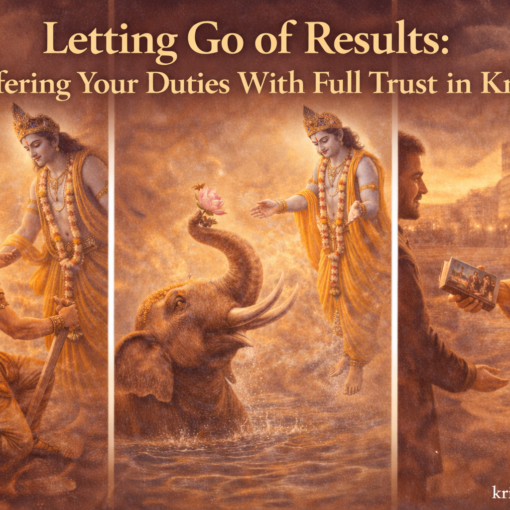
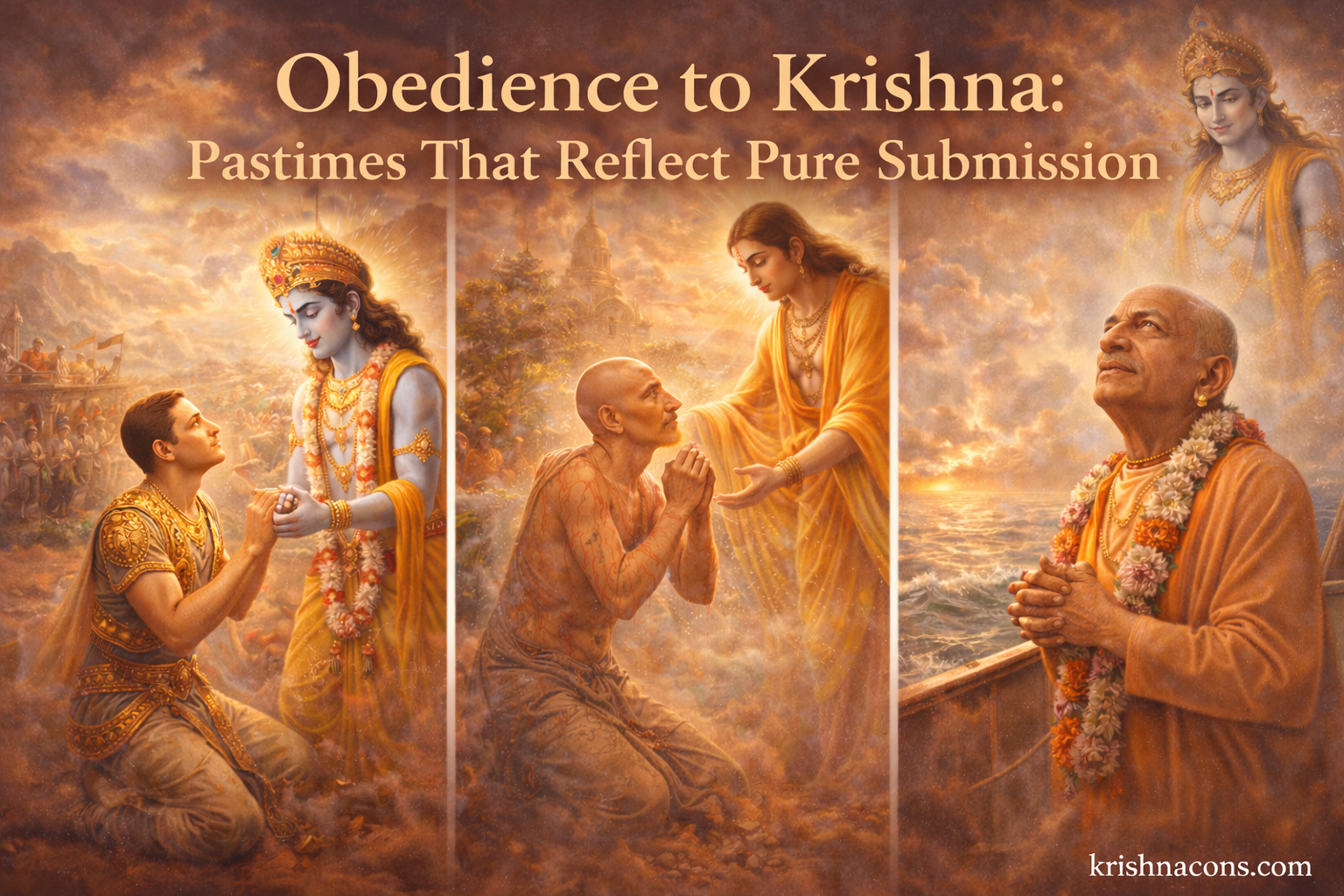
1️⃣ Śrīmad Bhāgavatam – Arjuna: Obedience That Silenced the Ego
(SB / Bhagavad-gītā battlefield pastime)
Arjuna stood between two armies—hands trembling, heart breaking.
He was not ignorant.
He was not weak.
He was overwhelmed.
He argued with Krishna. He reasoned. He resisted.
Every word was honest—but mixed with ego and attachment.
Finally, something broke—not his courage, but his false independence.
Arjuna put down his bow and said words that changed history:
“I am Your disciple. I surrender unto You. Please instruct me.”
From that moment, Arjuna stopped deciding and started executing.
He did not fight because he wanted victory.
He fought because Krishna wanted him to fight.
His obedience was not mechanical.
It was conscious, painful, and complete.
Emotional Core:
Arjuna obeyed not because he understood everything—
but because he trusted Krishna more than his own judgment.
That obedience turned confusion into clarity.
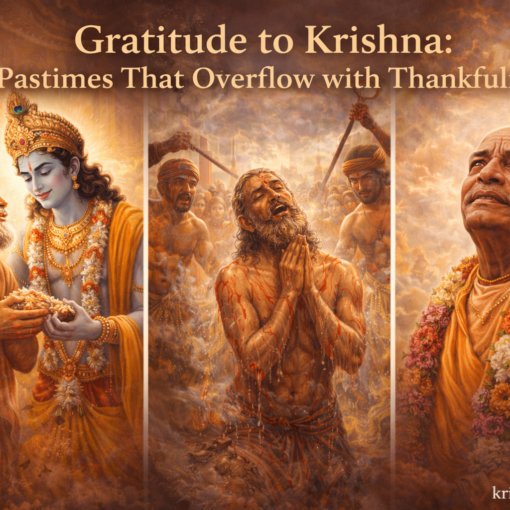
2️⃣ Chaitanya Charitāmṛta – Sanātana Gosvāmī: Obedience That Killed False Renunciation
(Chaitanya Charitāmṛta pastime)
Sanātana Gosvāmī’s body was covered with open sores.
Flies gathered. Pain followed every step.
Yet he continued serving Śrī Chaitanya Mahāprabhu.
Feeling disgusted with his body, Sanātana decided:
“I will end this body by throwing myself under the wheels of Lord Jagannātha’s chariot.”
It sounded renounced.
It sounded spiritual.
But when Mahāprabhu heard this, His voice thundered with compassion:
“This body does not belong to you. It belongs to Me.”
Sanātana broke down.
He realized:
-
Renunciation without obedience is ego
-
Sacrifice without permission is pride
Sanātana obeyed.
He lived.
He served.
He wrote books that shaped Gaudiya Vaiṣṇavism forever.
Emotional Core:
Sanātana obeyed even when his own spiritual logic was rejected.
That obedience pleased Mahāprabhu more than any austerity.
3️⃣ Śrīla Prabhupāda – Obedience That Walked Alone
(A. C. Bhaktivedanta Swami Prabhupāda)
His Guru Mahārāja gave one instruction:
“Preach Krishna consciousness in the English-speaking world.”
Years passed.
No support came.
No institution backed him.
Still, Śrīla Prabhupāda never questioned:
-
“Why me?”
-
“Why alone?”
-
“Why now?”
At seventy years old, sick and penniless, he boarded a cargo ship.
No assurance of success.
No disciples waiting.
Only obedience burning quietly in the heart.
Later, when temples rose and thousands followed him, he never said:
“I did this.”
He always said:
“I simply followed my Guru Mahārāja’s instruction.”
Emotional Core:
Śrīla Prabhupāda did not obey because success was guaranteed.
He obeyed because obedience itself was success.
🌿 The Thread That Connects All Three
-
Arjuna obeyed despite emotional collapse
-
Sanātana obeyed despite spiritual misunderstanding
-
Śrīla Prabhupāda obeyed despite total uncertainty
Different situations.
Same heart.
🕊️ Closing Emotional Line
- Obedience without ego is not losing oneself.
- It is allowing Krishna to act without obstruction.
- And when ego steps aside, history moves.
Obedience Without Ego: The Rarest Form
Ego-driven obedience says:
-
“I obey—but remember me.”
-
“I follow—but appreciate me.”
-
“I serve—but on my terms.”
Pure obedience says nothing.
It simply acts, leaving the result and recognition to Krishna.
A Prabhupāda-Aligned Insight
A. C. Bhaktivedanta Swami Prabhupāda repeatedly emphasized that success in spiritual life depends on following instructions without personal motivation.
He did not innovate devotion.
He executed instruction—word by word, town by town.
That obedience, free from ego, changed the world.
Why Obedience Purifies the Heart
Obedience:
-
Breaks subtle pride
-
Dissolves the need to control
-
Protects us from self-made confusion
The ego wants authorship.
Bhakti wants alignment.
When obedience is sincere, Krishna supplies intelligence from within.
Modern Struggle: Why Obedience Feels Difficult Today
Today we are trained to:
-
Customize everything
-
Question authority
-
Prioritize self-expression
Bhakti asks something radical:
“Trust before understanding.”
Not blind trust—
but trust grounded in śāstra, guru, and sādhus.
Practical Application: Practicing Obedience Daily
-
Follow sādhana even when the mind resists
-
Execute service instructions without altering intent
-
Resist the urge to “improve” Krishna’s plan
-
Accept correction without inner argument
-
Remember: obedience protects you more than it restricts you
Each small act of obedience weakens the false ego.
Closing Reflection
The ego asks, “What will I gain?”
Obedience asks, “What does Krishna want?”
When that question becomes natural,
obedience turns into love in action.
And such obedience never goes unnoticed by Krishna.