One Principle of Service, Three Divine Expressions
In the Vedic tradition, the Supreme Lord appears in many forms, each revealing different moods, relationships, and purposes. Among these divine manifestations, three personalities stand out as the perfect exemplars of service to the Supreme Lord:
-
Lord Balarāma
-
Lakṣmaṇa
-
Nityānanda Prabhu
At first glance, they may appear as distinct figures across different yugas. But when studied through the lens of śāstra and ācāryas, a profound truth emerges:
They represent one eternal principle—pure, unconditional service to the Supreme Lord.
Lord Balarāma: Service as Strength and Support
Lord Balarāma appears in Dvāpāra-yuga as the elder brother of Śrī Kṛṣṇa. He is not only Kṛṣṇa’s sibling but His first expansion and the original source of all forms of spiritual strength (bala).
Key qualities of Lord Balarāma:
-
Protector of Kṛṣṇa and the residents of Vṛndāvana
-
Teacher of spiritual discipline and humility
-
Personification of spiritual strength used only in service
Although immensely powerful, Balarāma never competes with Kṛṣṇa. His strength exists only to assist the Lord’s pastimes.
Lesson: True strength is not domination—it is support.
Lakṣmaṇa: Service as Loyalty and Sacrifice
In Tretā-yuga, the same service principle appears as Lakṣmaṇa, the younger brother of Lord Rāma.
Lakṣmaṇa’s life is a continuous sacrifice:
-
He renounces royal comforts
-
He follows Rāma into exile
-
He guards Sītā Devī
-
He sleeps less, eats less, and lives only for service
Lakṣmaṇa does not seek recognition. His joy is simply to stand beside the Lord, sword in hand, heart surrendered.
Lesson: True love is shown not in words, but in unwavering presence.
Nityānanda Prabhu: Service as Mercy Without Conditions
In Kali-yuga, the same divine principle manifests as Nityānanda Prabhu—the most astonishing revelation of service yet.
Unlike Balarāma and Lakṣmaṇa, Nityānanda Prabhu:
-
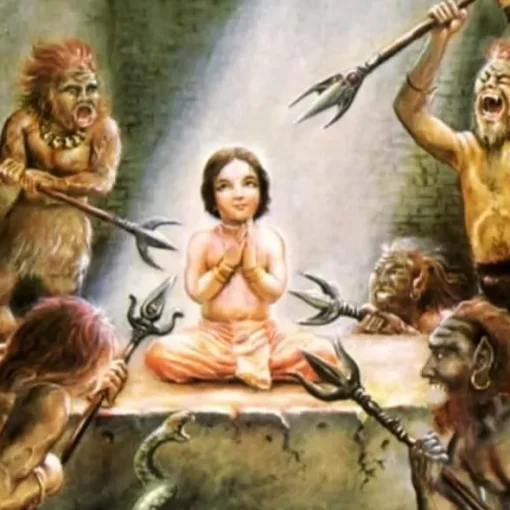
Seeks out the most fallen
-
Approaches the violent and sinful
-
Delivers mercy without preconditions
-
Accepts personal harm but never withdraws compassion
He does not ask, “Are you qualified?”
He asks only, “Will you chant?”
This is service transformed into mercy distribution.
Lesson: The highest service is bringing others back to the Lord—even at personal cost.
Unity Without Confusion: One Principle, Different Roles
It is essential to be clear:
-
Lakṣmaṇa is not directly Balarāma
-
Nityānanda Prabhu is not a historical incarnation of Lakṣmaṇa
-
Each appears in a different līlā, time, and function
Yet, Vaiṣṇava ācāryas teach that the service identity—the mood—is one.
| Form | Yuga | Dominant Mood |
|---|---|---|
| Balarāma | Dvāpara | Strength in service |
| Lakṣmaṇa | Tretā | Loyalty in service |
| Nityānanda | Kali | Mercy in service |
The same servant-heart, adapted for the needs of each age.
Why Kali-yuga Needed Nityānanda Prabhu
In earlier ages:
-
People had discipline
-
Kings had dharma
-
Society supported spiritual life
In Kali-yuga:
-
People are broken
-
Minds are disturbed
-
Faith is fragile
So the Lord sent not just a servant—but mercy personified.
Nityānanda Prabhu does not wait for reform.
He creates reform by compassion.
A Message for Today’s Practitioner
From these three divine personalities, we learn:
-
From Balarāma: Be strong, but humble
-
From Lakṣmaṇa: Be loyal, even in hardship
-
From Nityānanda: Be merciful, even when hurt
This is the evolution of service—from support, to sacrifice, to salvation.
Final Reflection
If Kṛṣṇa is the sun,
Balarāma is its strength,
Lakṣmaṇa is its shadow,
and Nityānanda is its warmth—
reaching even those who hide in darkness.
Jai Baladeva!
Jai Lakṣmaṇa!
Jai Nityānanda Prabhu!
Haribol!